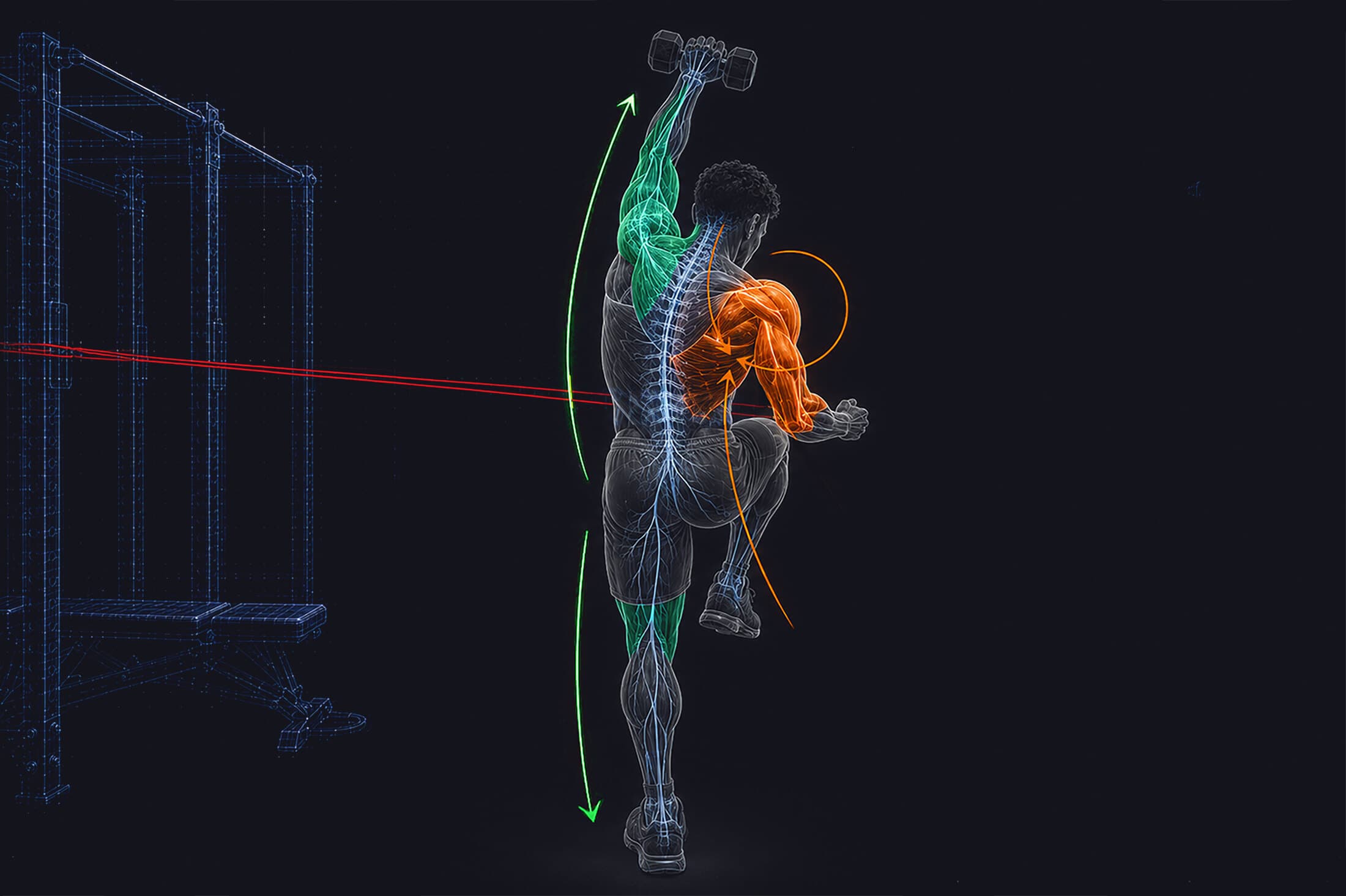
The Method
RINE Protocols™ don't patch symptoms. They rewire how your brain and body coordinate movement, from the deepest proprioceptive layers to the fascial chains that connect everything.
Start with the name.
RINE Protocols™ stands for Reciprocal Inhibition based Neural Entanglement.
KPA's proprietary system for rewiring how your brain, nervous system, and muscles coordinate movement. Instead of strengthening or stretching individual muscles like conventional rehab, RINE recalibrates the entire neuromuscular fascial system across our theorized eight kinetic chains, so force travels through your joints the way it was designed to instead of grinding them down. It works through four mechanisms: deep proprioceptive input, rewiring the brain's movement programming, fascial-chain activation, and structural remodeling. The result is that the root cause is corrected, so pain doesn't just fade, it stays gone.
Why PT, chiro, and surgery don't last.
Most rehab works one of two ways: it strengthens what's weak or stretches what's tight. And for a while, it helps. But these are active treatments against your passive system. The moment you stop, your body defaults back to the same dysfunctional pattern. Because nobody changed the pattern itself.
Conventional Approach
Works on the surface
- Strengthens or stretches individual muscles
- Adjusts individual joints
- Repairs individual structures
- Relief fades the moment treatment stops
The RINE Approach
Rewrites the system
- Recalibrates all eight kinetic chains at once
- Reprograms the brain's movement patterns
- Changes the body's passive default
- Results hold because the pattern reinforces itself
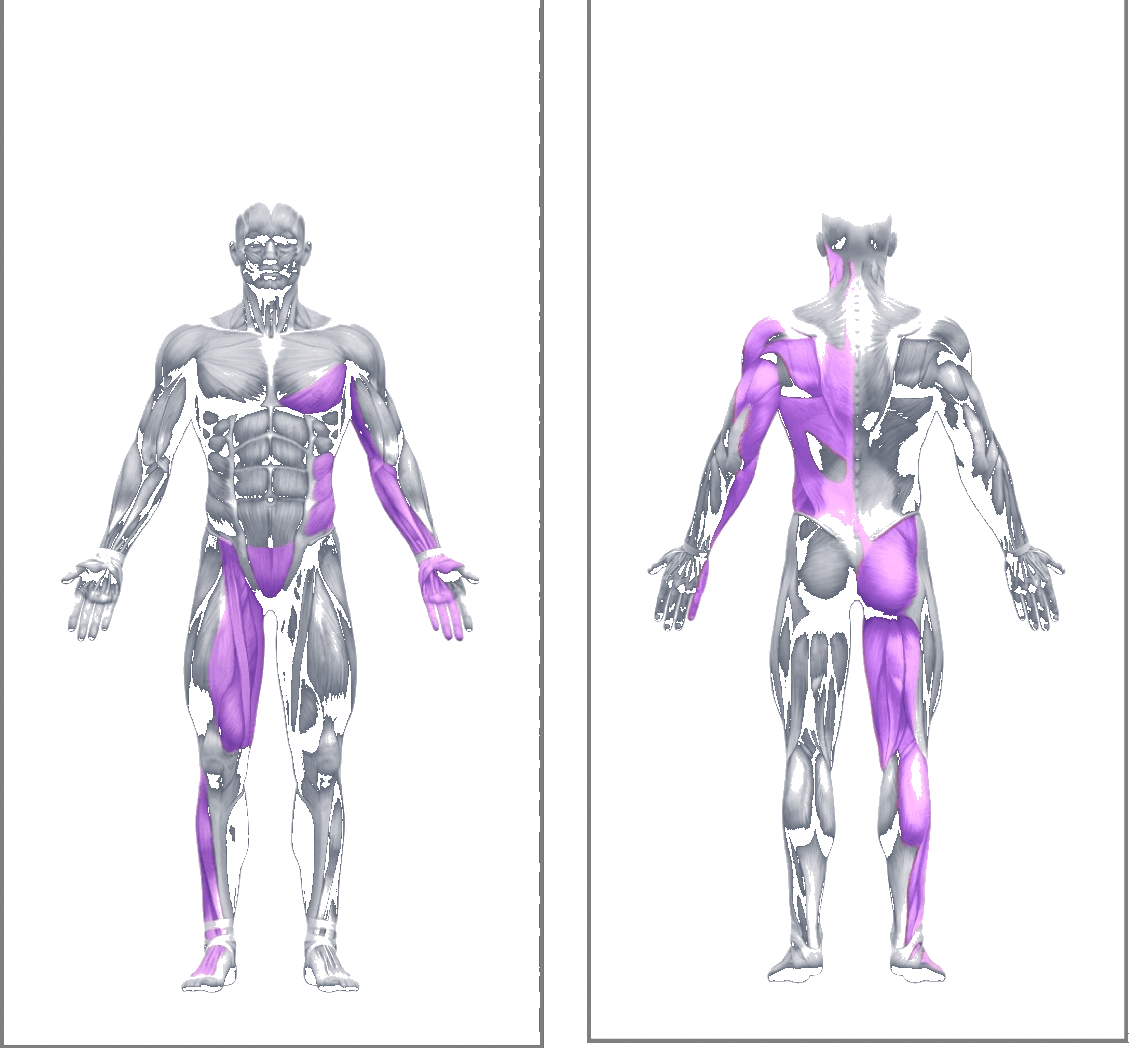
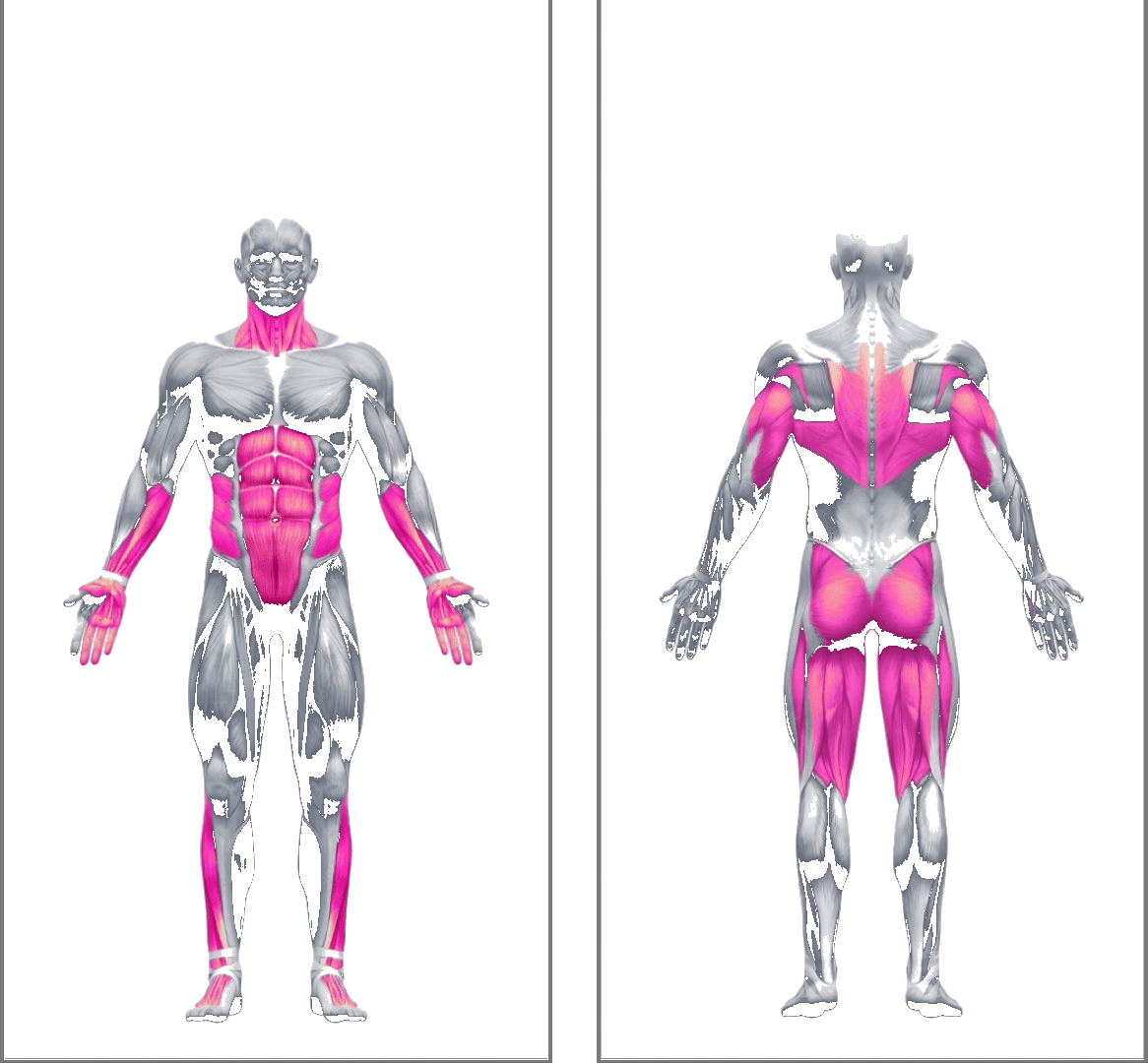
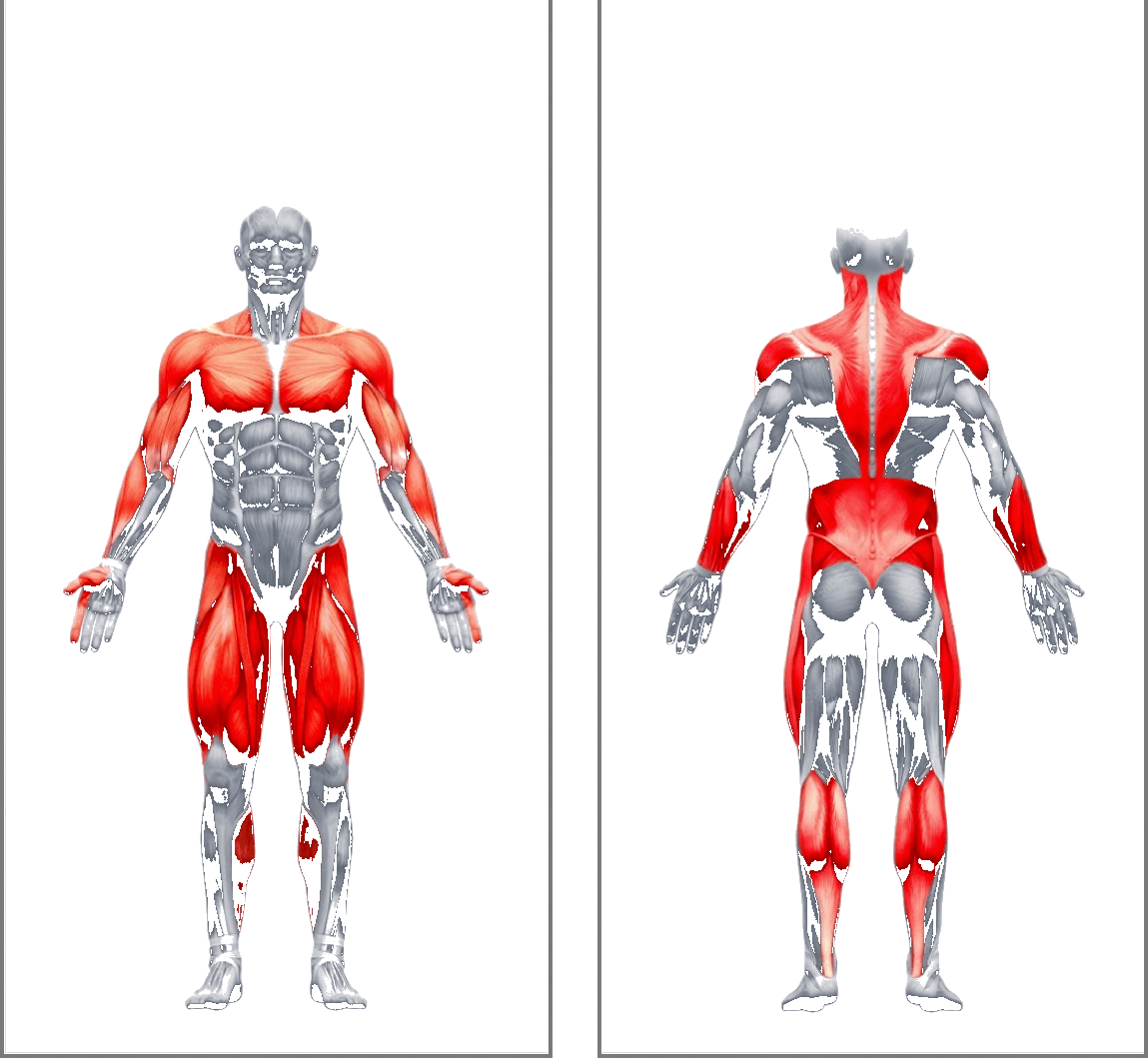
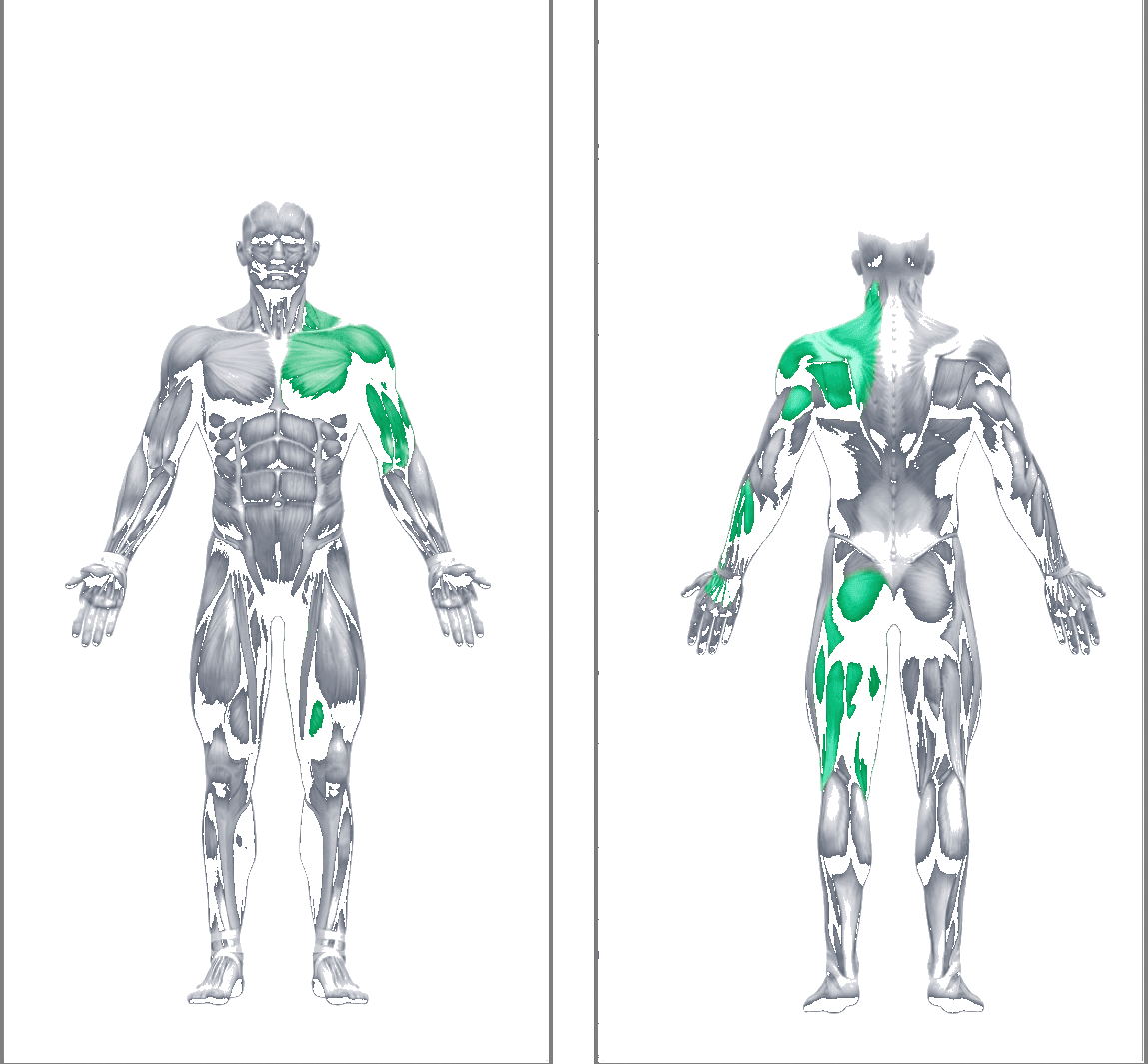
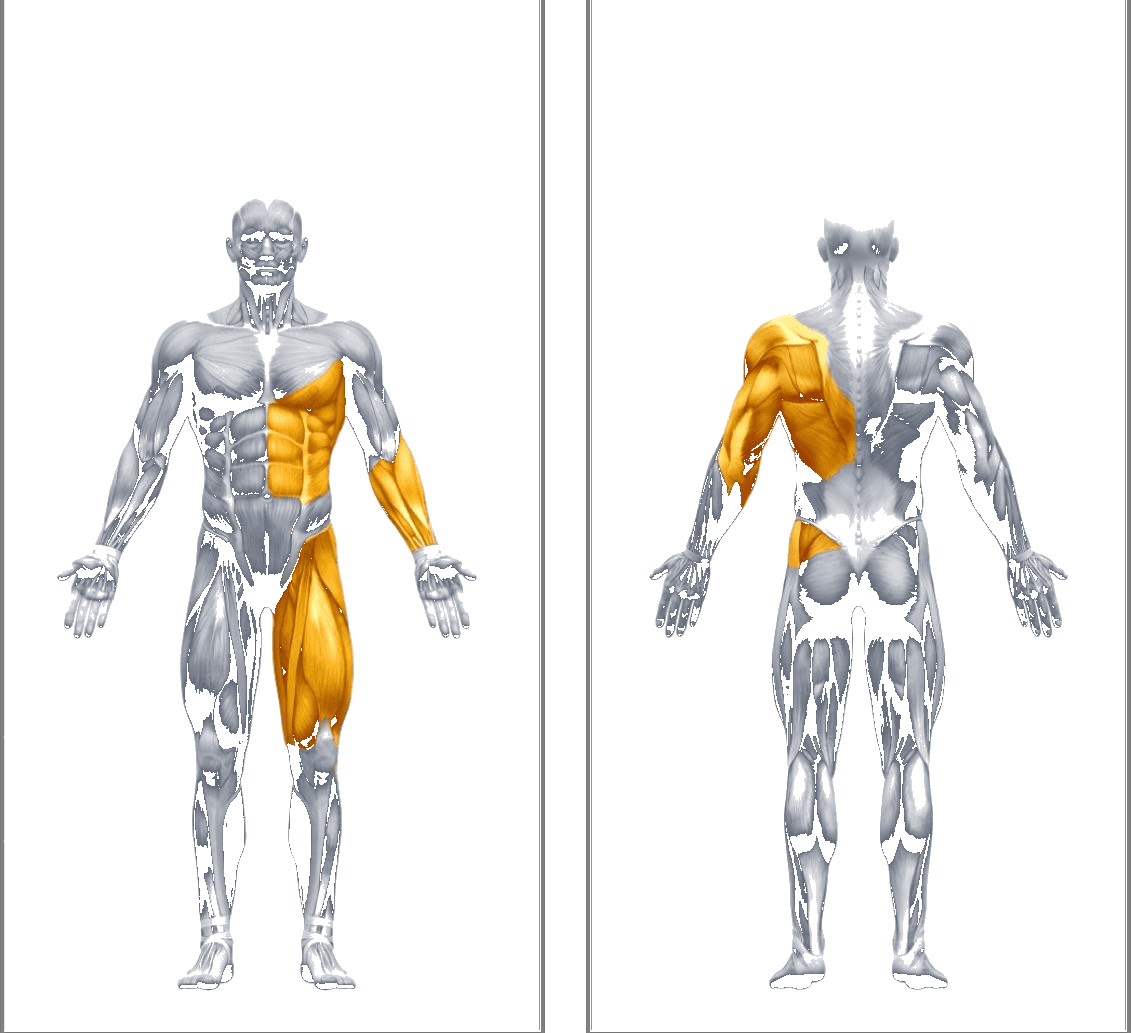
Eight kinetic chains. Most people use three.
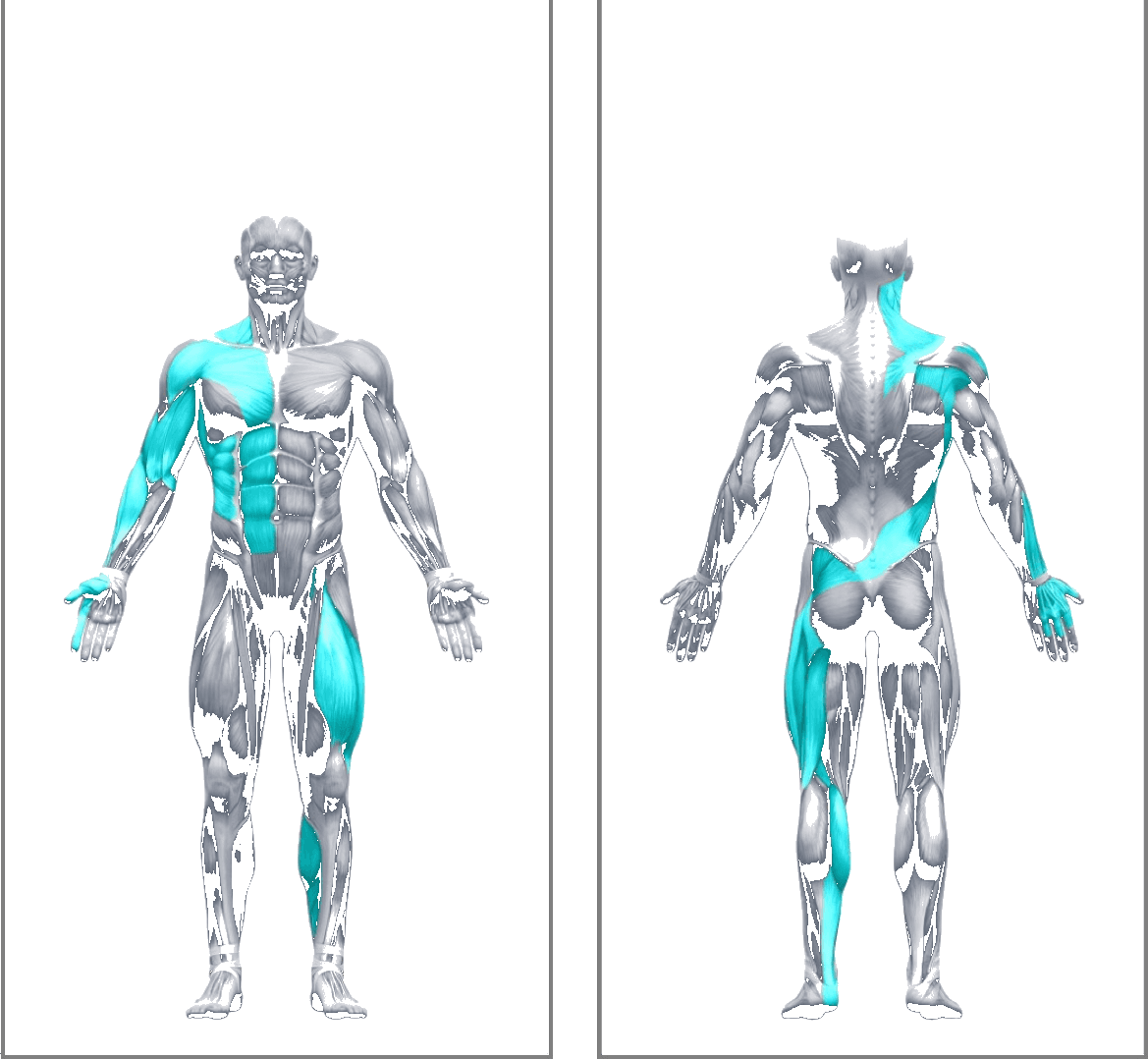
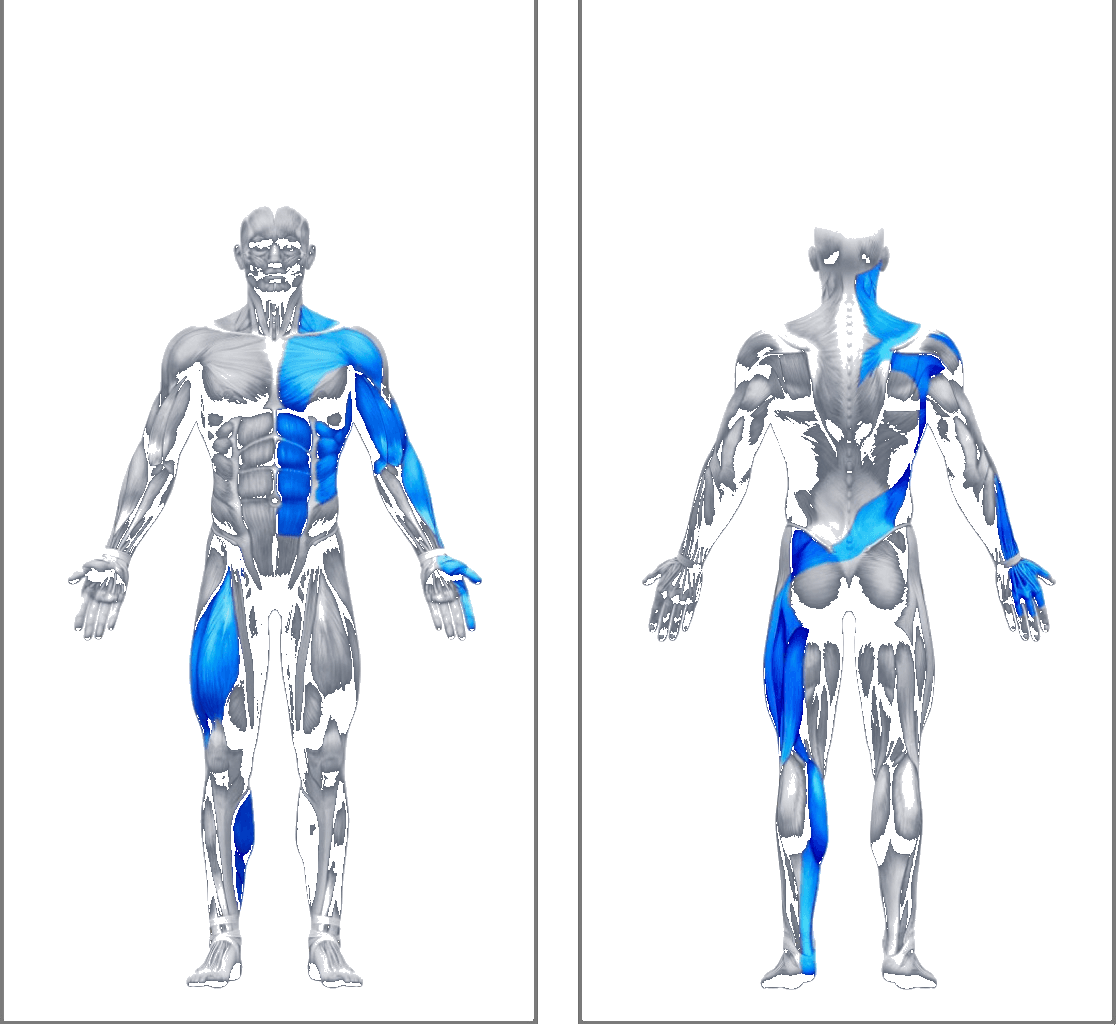
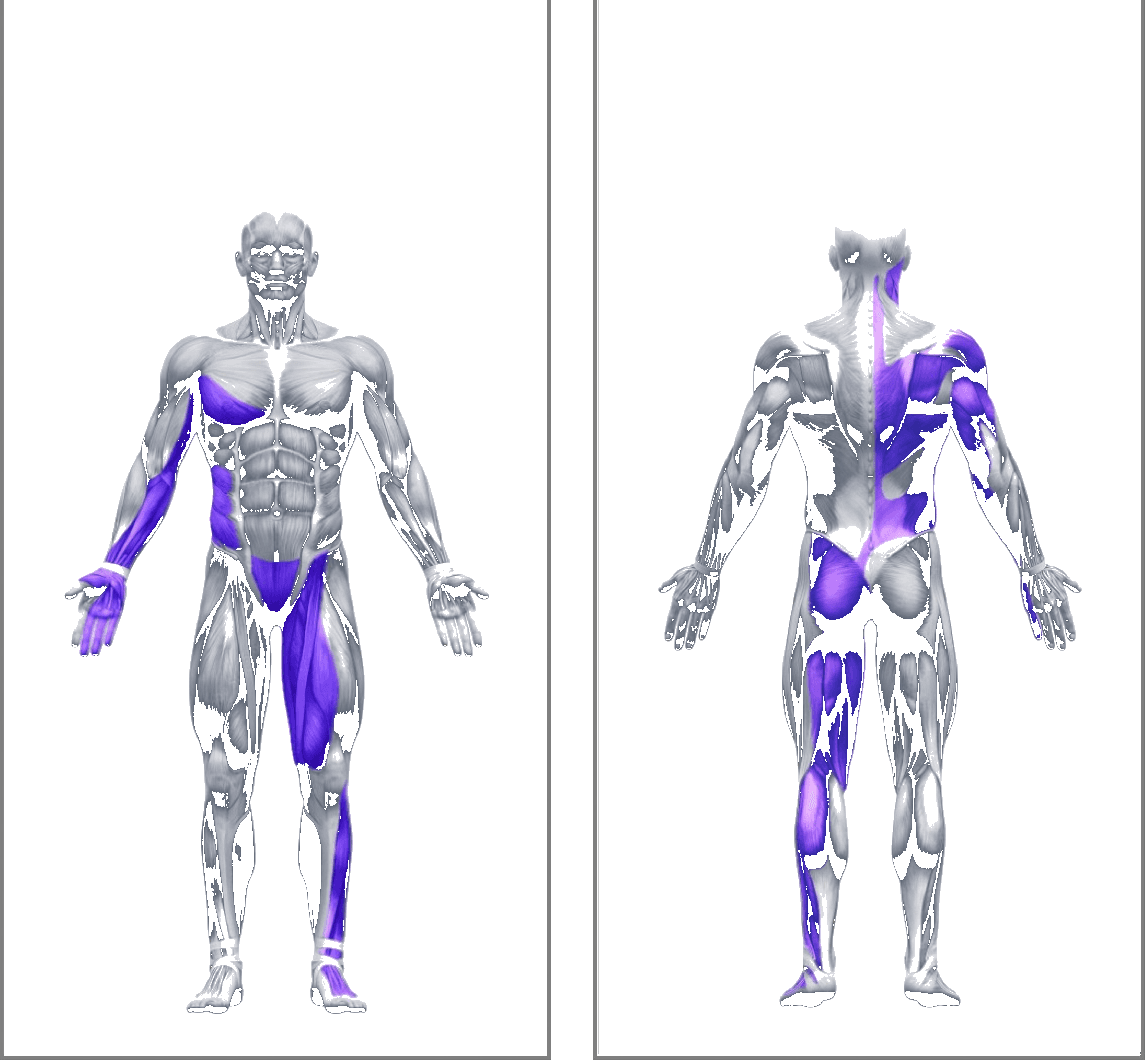
Your body runs on eight kinetic chains: networks of muscle, fascia, and nerve meant to fire in harmony. When the system malfunctions, muscles work against each other and force drives through your joints at the wrong angle. That's where pain starts, and where power leaks. RINE recalibrates all eight, so force flows the way it was designed to. Explore them below.
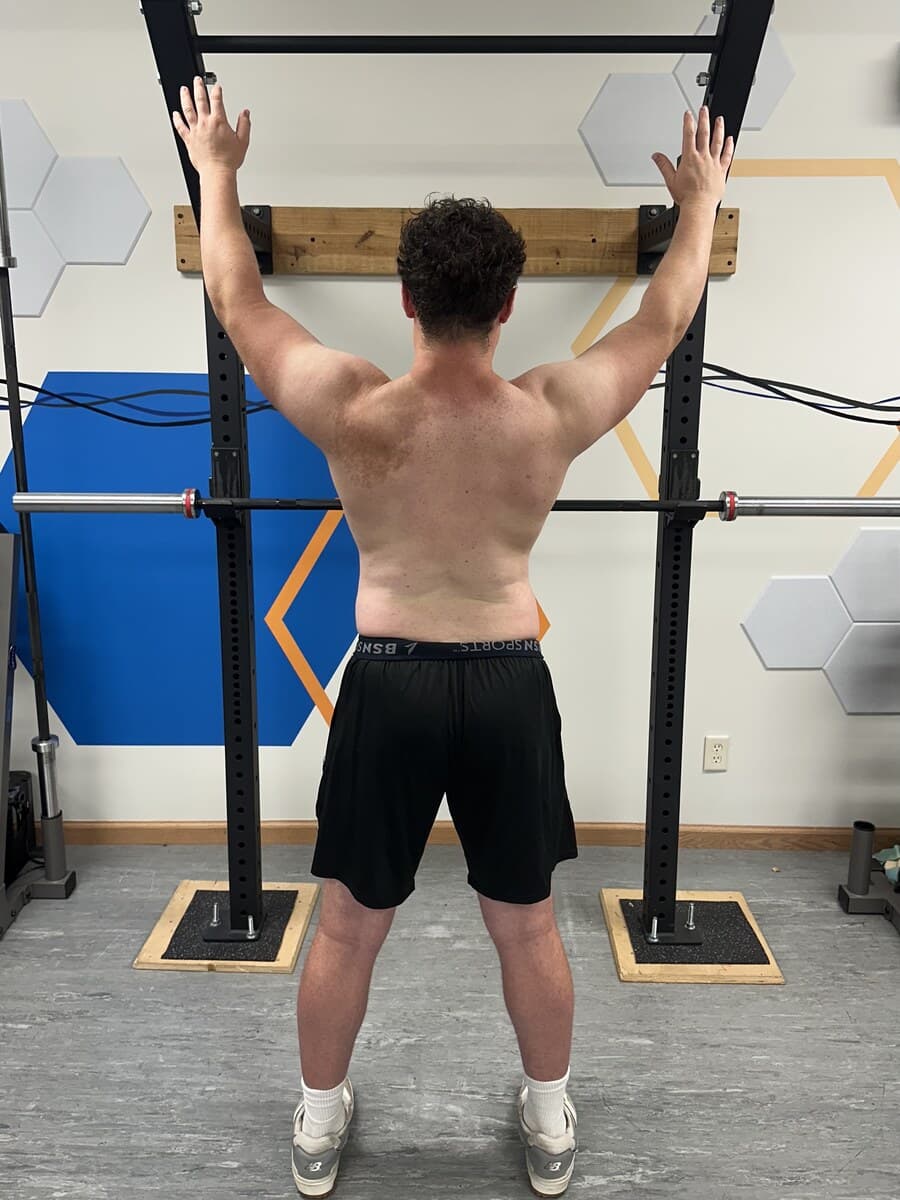
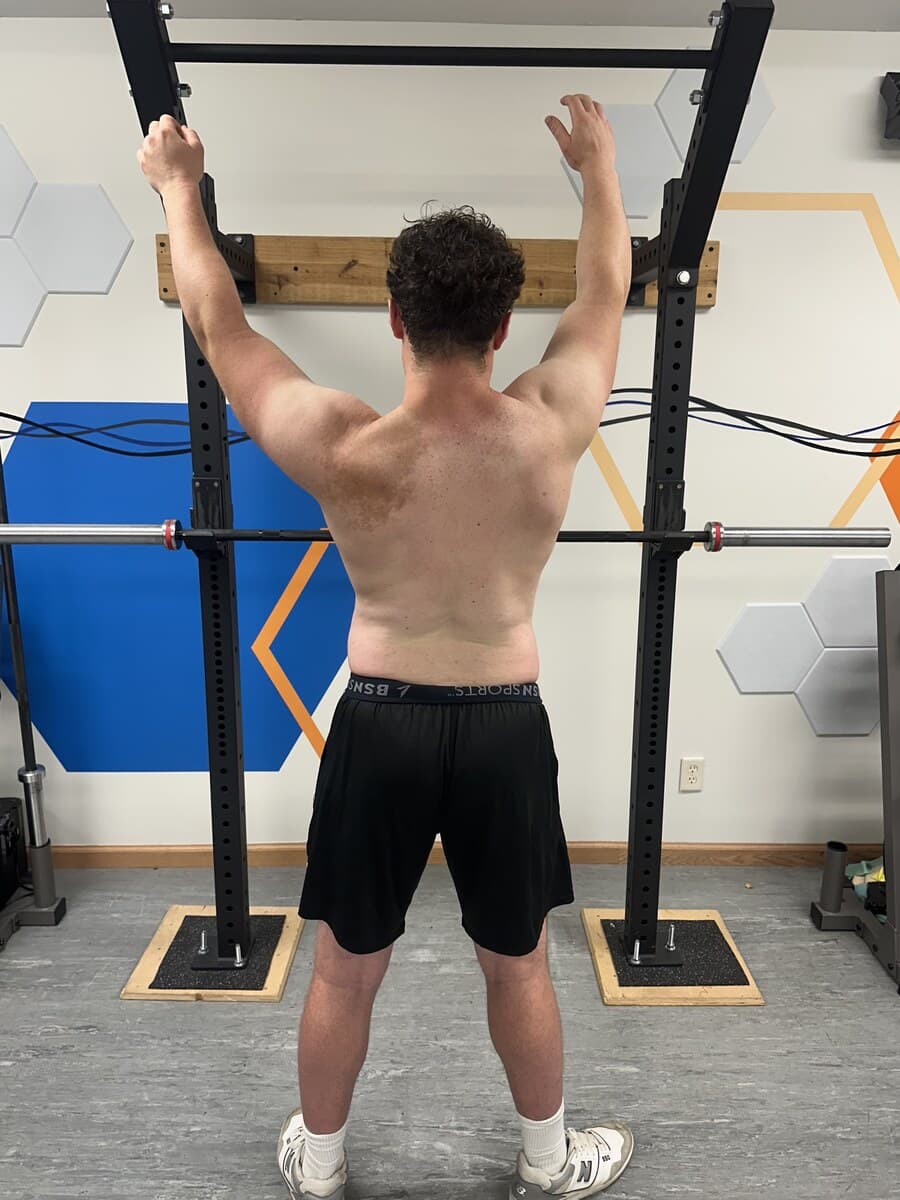
Watch the change happen.
Drag the slider. This is Brody's overhead reach before and after rebuilding his movement system. Same man, same rack, weeks apart.
Four mechanisms of change.
RINE doesn't strengthen muscles. It moves through four sequential mechanisms that recalibrate the entire system.
Deep Proprioceptive Input
We input new data through your body's highest-density sensory regions (the rotator cuffs, the intrinsic spinal muscles, and the deep hip rotators), speaking directly to the subconscious systems that control how you move.
Rewiring the Movement Program
Your nervous system runs stored movement programs learned from years of compensation and injury. RINE breaks the old programs and installs new ones, targeting the cerebellum and the subconscious motor centers.
Fascial Chain Activation
By working through terminal ranges of motion, RINE stimulates the fascial sensory network: the connective tissue linking muscle, joint, and nerve across your whole body. This is where the eight chains come alive.
Structural Remodeling
Over time, your body physically remodels to support the new programming. Muscle redistributes, stabilizers strengthen, and the nerves themselves adapt to serve the new movement architecture.
Why force becomes damage.
When your chains misfire, force drives into the joint at the wrong angle, grinding cartilage, straining ligaments, accumulating the damage behind chronic pain, arthritis, and torn tissue.
Misaligned: every rep drives damage into the joint.
The Analogy
Why does RINE work when nothing else did? Think of your body like a car.
Other programs work on the car
while it's still on the ground.
You can see and patch a few things on the surface, but you can't reach what actually needs to change. RINE puts your body up on the lift and opens up the systems underneath, where the real problem lives. That's why we fix what others can't, working at a completely different depth.
What changes when the system works.
Not marketing promises. Just the downstream effects of a body that finally coordinates force the way it was designed to.
Pain elimination
Chronic pain resolves because force vectors realign with joint design.
Surgery prevention
Structural problems that seemed surgical become manageable.
Athletic performance
Power transfer improves when all eight chains coordinate.
Sleep quality
Reduced systemic tension allows deeper rest.
Mental clarity
Less neural noise from compensatory patterns.
Energy levels
The body stops wasting energy fighting itself.
Injury resistance
Proper force distribution protects tissues under load.
Recovery speed
Post-surgery and post-injury recovery accelerates dramatically.
Two tracks. One system.
Whichever brought you here, the underlying recalibration is the same, tuned to your goal.
Ready to see what your body is actually capable of?
Apply for an assessment and find out which track fits your goal.